The free Disaster & Religions App is a religious literacy resource designed to help faith and community leaders, first responders, disaster service professionals, and neighbors competently engage with and care for people of faith of all backgrounds in crisis settings. The app’s recent updates include expanded resources on 27 denominations and religions as well as a new Prayers Module for Chaplains and First Responders. Read more about the updates here! Download for free from the App Store or Google Play.
==============================================================================
Public Assistance for Houses of Worship
Has your house of worship suffered damage within a Public Assistance declared event? Follow these instructions:
Submit Insurance Claims as Soon as Possible
Public Assistance may cover insurance deductibles, uninsured or underinsured losses.
Application Process
- Attend the State, Tribal, or Territory Applicant Briefing.
- Submit a FEMA Request for Public Assistance online through Grants Portal within 30 days of a presidential declaration.
- If eligible, FEMA and the state will then coordinate a Recovery Scoping Meeting to determine reimbursable damages.
What You will Need to Provide
- Evidence of federal or state tax-exempt status or other documents indicating nonprofit status, such as bylaws or articles of incorporation. Pre-disaster evidence of incorporation/charter/bylaws.
- A Data Universal Number Systems number established with the government.
- Supporting documentation establishing lease or ownership of the building, proof of use, and proof of insurance.
If eligibility is granted, the following will need to be submitted: A list of sites damaged; “before and after” pictures; and information about any historic structures.
++++++++++++++++++++++++++++++++++++++++++++++++++++++++++++++++++++++++++++++++++++++++
Fire Safety Resources for Houses of Worship
Each year from 2020 to 2022, an estimated average of 1,300 fires in places of worship were reported to fire departments in the United States. These fires resulted in an estimated annual average of $74.6 million in property loss. The leading cause of fires in places of worship was cooking (33%), but intentional actions accounted for an additional 15%.
Choosing and Using Fire Extinguishers
It’s important to understand that with proper training and education, fire extinguishers can save lives and property. Many adults might not know how or when to use fire extinguishers. Fire departments can help with fire extinguisher training and answer questions that community members may have.
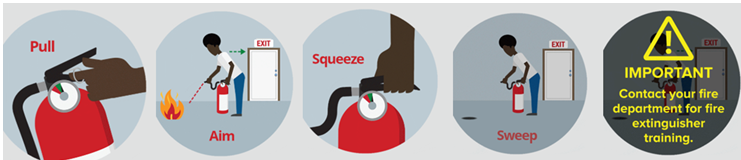
To operate a fire extinguisher, tell your community and/or members of your house of worship to remember the word PASS:
- Pull the pin. Hold the extinguisher with the nozzle pointing away from you and release the locking mechanism.
- Aim low. Point the extinguisher at the base of the fire.
- Squeeze the lever slowly and evenly.
- Sweep the nozzle from side-to-side.
+++++++++++++++++++++++++++++++++++++++++++++++++++++++++++++++++++++++++++++++++++++++++++
Katie Howe, United Church of Christ Minister for Disaster Response and Recover, recorded 2 webinars on Disaster Preparedness –
Part 1 – Disaster Preparedness I: Building Community Connections Before Disaster Hits
In this webinar, Katie Howe, Minister for Disaster Response and Recovery discussed how creating coalitions and community building during non-disaster times can create an environment that can help communities if they experience a disaster including climate-caused, human caused, technological or environmental disasters. She was joined by Rev. Dr. Becca Girrell from the United Community Church of Morrisville, VT. Rev. Girrell discussed her experience with building community connections prior to the significant repeated flooding in Morrisville, VT, and how that has had a positive impact on their community.
Part 2 – Disaster Preparedness II: Create an Emergency Preparedness Plan in Your Church
Katie Howe, Minister for Disaster Response and Recovery discussed how loving our neighbor starts with being prepared for disasters. There are some steps that all churches should be taking regardless of their financial or human resources. She discussed some of the main ideas in the newly revised Local Church Disaster Preparedness Workbook, and discuss the importance of having a well-structured preparedness plan. She was joined by Rev. Kelly Hansen, Conference Disaster Response Coordinator for the Kansas-Oklahoma Conference United Church of Christ who discussed their experience with disaster preparedness.